
One hint
The game shows one next step.
Know why a move works
You may feel good when you find a move you can explain. You have not finished yet. But you know why one square must be filled. Or you know why a push would trap a crate.
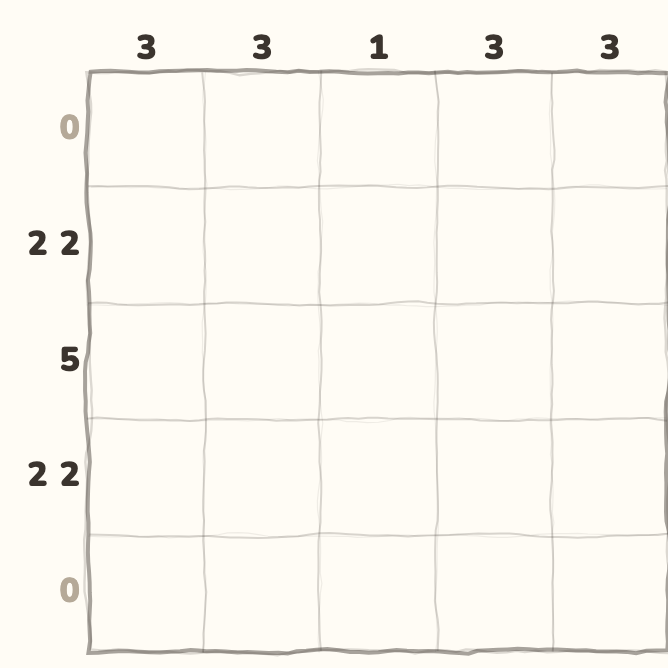
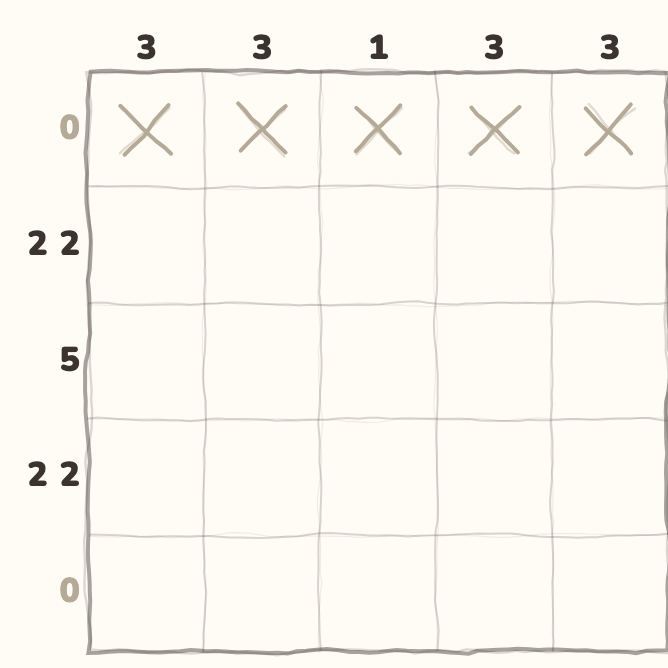
For a picture puzzle, think of each place a filled group could fit. A square filled in every allowed place is sure. You can mark it while leaving the other squares unknown.
Use one fact to find the next
Each square is part of a row and a column. A row goes across. A column goes down. After filling a sure square, check its column clue. Does it finish a filled group? If so, the next square may need to stay empty.
If more than one plan still fits, keep the choices open. Do not guess from a picture. Ask one small question: what do I know for sure? Then ask what that fact tells me next.
Find what went wrong
In ordinary Sokoban, you push crates but cannot pull them. A crate in a corner with two walls cannot come out. If that corner has no goal, you cannot finish. A longer path may be better if it keeps the crate free.
Before pushing, find where the crate will go. Find where you must stand for its next push. If a try fails, name the problem. Did you block a walking square? Did you trap a crate? Use that fact to try a new plan.
A study of puzzle fun
In 2025, Chu, Zheng and Fan studied a crate game called Sokoban. They looked at play records from 442 puzzles. They also asked 250 people how much fun a puzzle try was. People who solved it reported more fun when they took fewer moves. People who did not solve it reported more fun when they took more moves. These things went together. That does not prove that harder puzzles cause more fun. It does not prove extra moves will make your try better.
You may like a short solve after you learn a board. You may like trying an idea before you can finish. Those are different kinds of play. A long try is not always better. A board you did not finish is not always wasted time.
It can feel worth doing
In 2025, Campbell's team did five studies with 2,569 people in all. Some tests used Sudoku and easier tasks. Hard play often felt more worth doing. But that feeling did not keep growing as the work got harder. It could level off. The fun results were mixed. More work did not always mean more fun. These results do not tell us the best puzzle for every person.
Ask two things after a try. Did I learn why a move works? Did I have fun? The answers can be different. You can keep what you learned and still stop. You can try again, use a hint or choose a new board. You do not have to keep making it harder.