


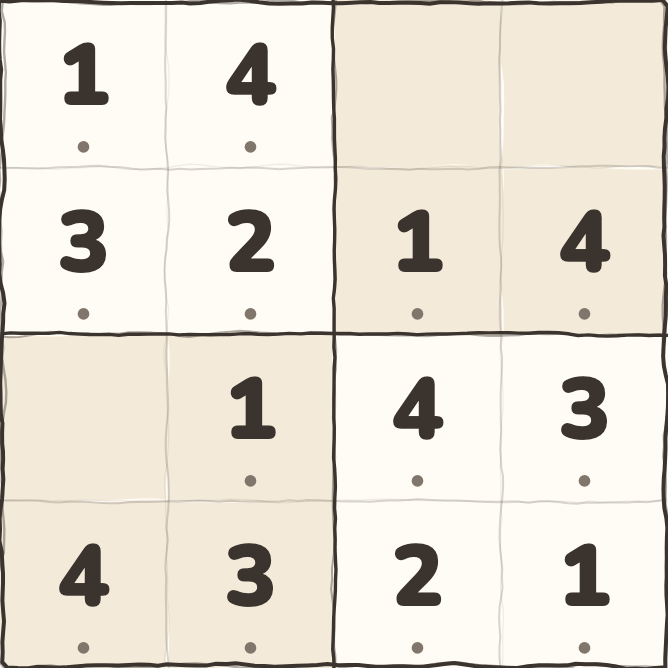
One hint
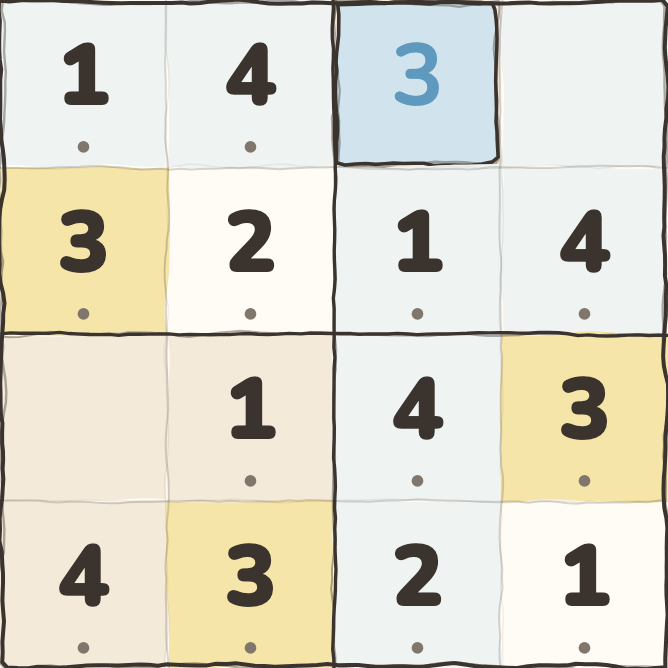
The game shows one next step.
Make a list of choices
A candidate is a number that may still fit. On a nine-by-nine board, start with 1 to 9. Cross out numbers already in the square's row, column or three-by-three box. On a four-by-four board, use 1 to 4 and two-by-two boxes.
Keep every choice that still fits. Do not add one that is ruled out. A list is not a reason to guess. You can keep notes in your head or on paper. This guide does not assume Nimo has a pencil-note tool.
Keep a pair of choices together
Suppose two squares in one group can each take only 1 or 2. Between them, they must use both. So no other square in that group can use 1 or 2.
This does not tell you which of the pair is 1. You still need more clues for the order. A square that can take 1, 2 or 7 cannot form this pair with a square that has only 1 or 2. Both must have only the same two choices.
Check your lists after a number
After placing a sure number, cross it off the other empty squares in its row, column and box. Check those groups again. A square may now have just one choice.
If you erase a number you were not sure of, make the nearby lists again from the board. Just adding one number back may miss other choices. Keep sure facts apart from guesses.
Use diagonals only when marked
Nimo's Diagonal Sudoku needs 1 to 9 once on each long marked diagonal too. A diagonal runs from corner to corner. The centre is on both. Check numbers on those lines when you make a list. The single and pair ideas work there too.
Classic Sudoku has no diagonal rule. Do not cross off a choice just because you see that number on a slant. Nimo warns about repeats already placed. A number with no warning can still be wrong later. Use a clue to choose, not just the lack of a warning.
Put the idea into practice
Try a little puzzle.
A small browser example of the rules, with hints if you need them.