
One hint
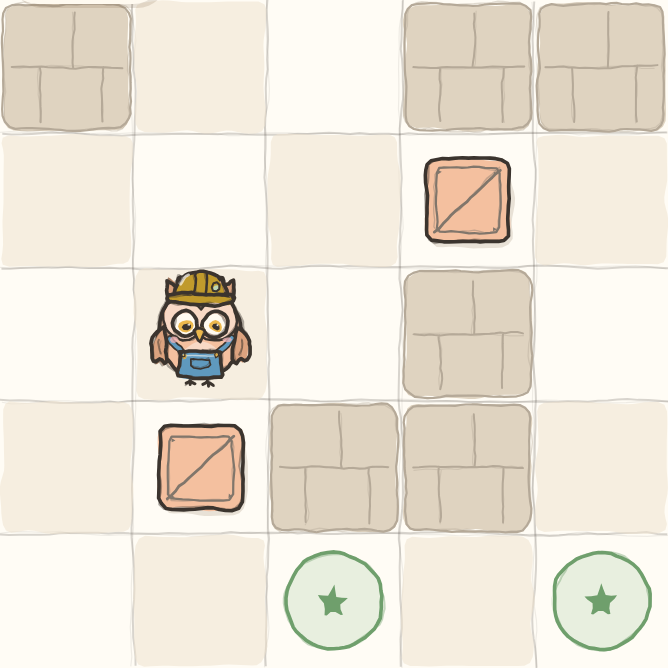
The game shows one next step.
An allowed push can trap a crate
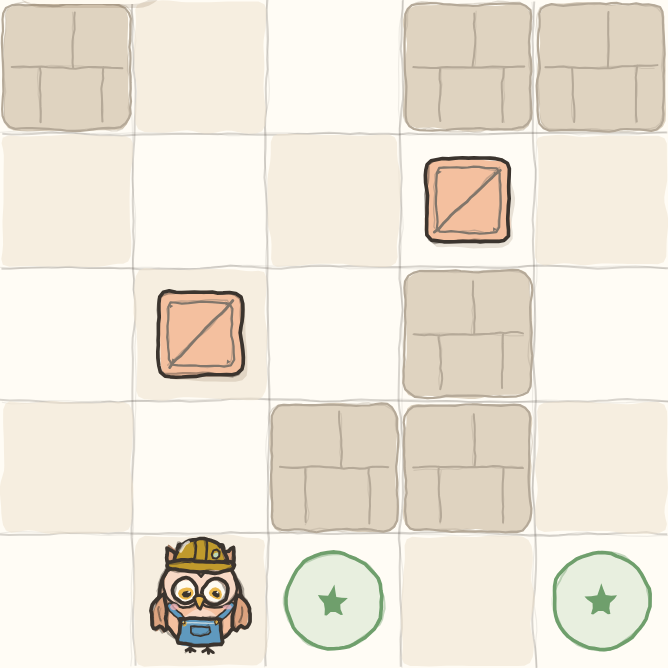
A stuck position that cannot be solved is called a deadlock. A crate in a corner with no goal is one example. You cannot pull it. You cannot stand in a wall to push it out.
A wall can trap a crate too. If it is against the top wall, you cannot stand above it to push down. It may still move left or right. That helps only if its goal can be reached while it stays on that row.
Watch a wall before pushing
A crate may have room to move toward a wall. But what happens after that? If it stops against the top wall, you cannot get above it to push down.
A goal below that wall may then be out of reach. Sliding the crate along the wall will not bring it down. Check the path to the actual goal before you push.
Walk round before you push
Try reaching another side without moving the crate. A walk round may let you push toward the goal while keeping the crate away from a trap.
Compare where the crate ends and where you can stand next. A quick push can lose useful space. A longer walk can keep the way to the goal open.
Plan the last push
Look at a goal. Where must the crate wait before its last push? Where must you stand? Can you still walk there after moving the other crates? A crate on a goal can still block a door another crate needs.
A crate can block your walk, another crate's next square or a place to stand. Two crates by a wall may trap each other. Check the spaces, not just the goals.
Check ice and arrows
On ice, a crate slides until plain floor or a block stops it. A square it passes through may not be a place to stop. On one-way arrows, you and the crate must enter in the way the arrow points.
Check the final crate spot first. Then check where you must stand and how to get there. If a push traps a crate, undo to the choice that caused it. More pushes will not make a wall turn into walking space.