


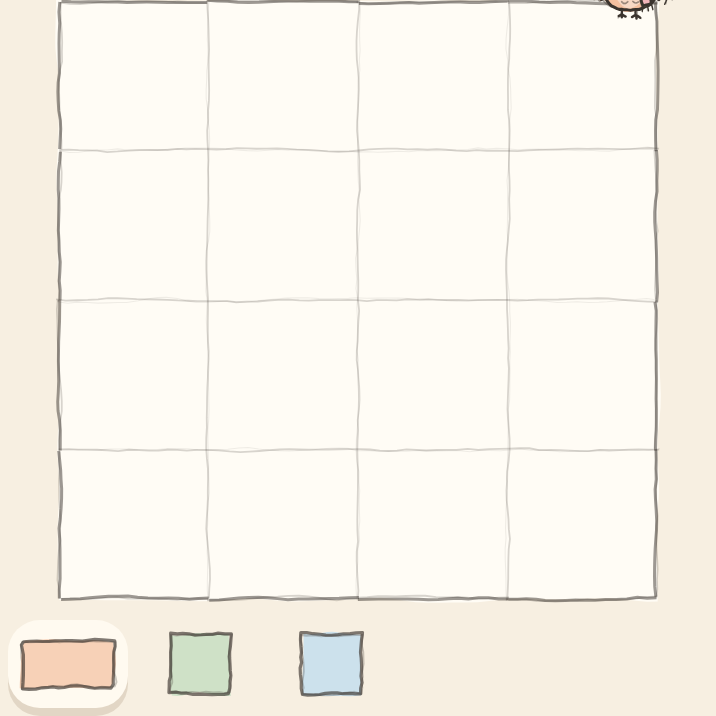
One hint
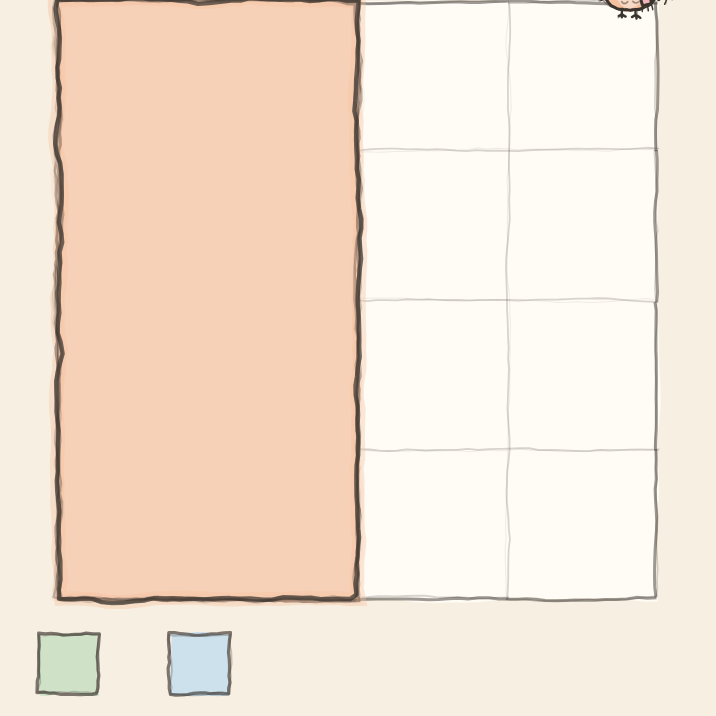
The game shows one next step.
Fill the whole outline
An outline is the border of the space to fill. Put every piece inside it once. Cover it all. Do not overlap pieces. Do not change a piece's size or shape.
A slide moves a piece. A turn changes which way it faces. A flip makes a mirror shape, when allowed. Nimo calls this game Shapes. Some boards use squares. Others use triangles, diamonds or mixed shapes. Read the pack lesson before moving a piece.
Read the outline and pieces
Look at the space inside the outline. Look at the shapes of the pieces. Find corners, long edges and narrow gaps. Ask which piece can fit each tight spot.
Count the space if the board uses square tiles. For polygon boards, compare the real edges and areas instead. A piece must keep its size and shape.
Put in one piece at a time
Choose a piece with few places to fit. Check its allowed turns or flips. Put it inside the outline without overlap.
Then look at the space left. Can the other pieces still cover it? A right total alone is not enough. An overlap can leave a gap somewhere else.
Check turns and flips
On a square board, a quarter turn puts a flat bar upright. A square looks the same after that turn. A flip is different. A piece with two unlike sides may need a flip to match a mirror-shaped gap.
Do not assume all polygon pieces turn in quarter turns. Nimo uses the turns allowed for that piece and board. Fixed pieces keep their first direction. In rotating polygon packs, coloured pieces can turn or flip where allowed. Iron blue-gray pieces only slide. Check the buttons and lesson.
Place a piece, then check the gap
For classic square Shapes, choose a piece. Turn or flip it if needed and allowed. Drag it into place. You can also tap where its first filled square goes. Find that square by reading left to right, then top to bottom. It may not be the corner of the space around the piece.
After each piece, check what is left. A tiny gap may mean an earlier piece needs to move. Some boards have holes that are not part of the outline. Leave those holes empty. Start with tight corners. Save open space for later.