
One hint
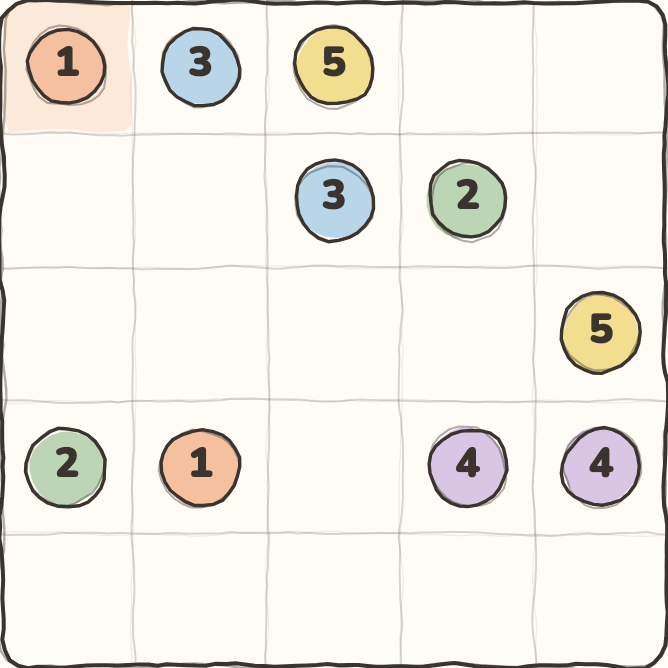
The game shows one next step.
Check the special squares
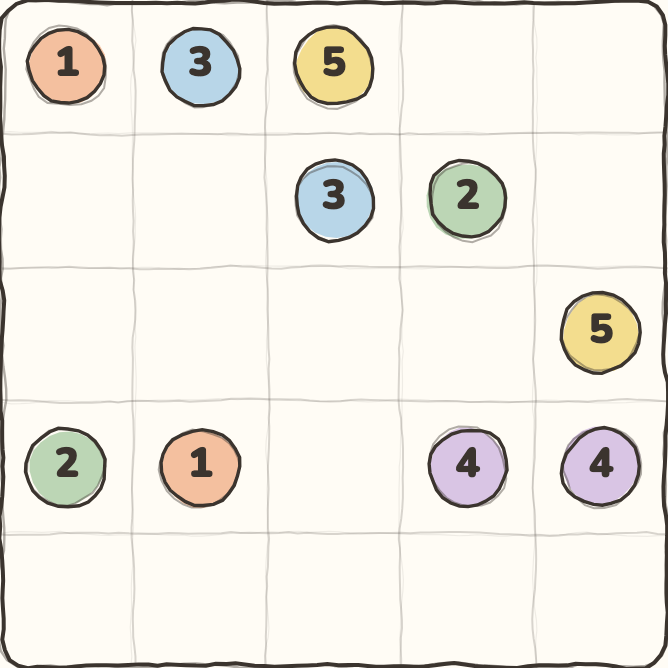
The picture shows a classic Routes board. Some packs add the bridges and portals below.
In Routes, join matching numbers. Cover the whole board. An ordinary square holds one path. Special squares have extra rules.
A bridge lets two different paths cross. They do not join there. A portal links two far-away squares. The jump does not fill the squares between them. Check these rules before you draw.
A bridge has two straight lanes
When a pack has a bridge, one lane goes across. The other goes up and down. Two different paths can cross there without joining.
A path entering from the left must leave to the right. It cannot turn up. One path cannot use both lanes. Leave the other lane for a different pair.
Check both lanes
Follow each route through the bridge. It must go straight in its lane. It cannot end there, branch or change lanes.
Is the across lane full? Is the up-and-down lane full? Are they different routes? One line over a bridge is not enough to finish it.
A portal must jump to its pair
When a pack has portals, find the matching portal spots. A path that enters one must jump to its pair next. It cannot walk past that first portal as if it were plain floor.
At the far portal, step to a neighbouring square. Do not jump straight back. Both portal squares count as used. A path cannot end at a portal. The jump fills no squares between the pair.
Leave room on both sides
Before a jump, find a way to reach the first portal. Then find a way out of the other one. Do not use up a different pair's end or cut off empty space. The jump fills no squares in between.
When stuck, check the special squares first. Each bridge needs both straight lanes. A used portal needs its pair. Each ordinary square needs one path. Nimo's pack lesson shows these rules. Watch it again if a bridge turn or a portal jump is unclear.