
One hint
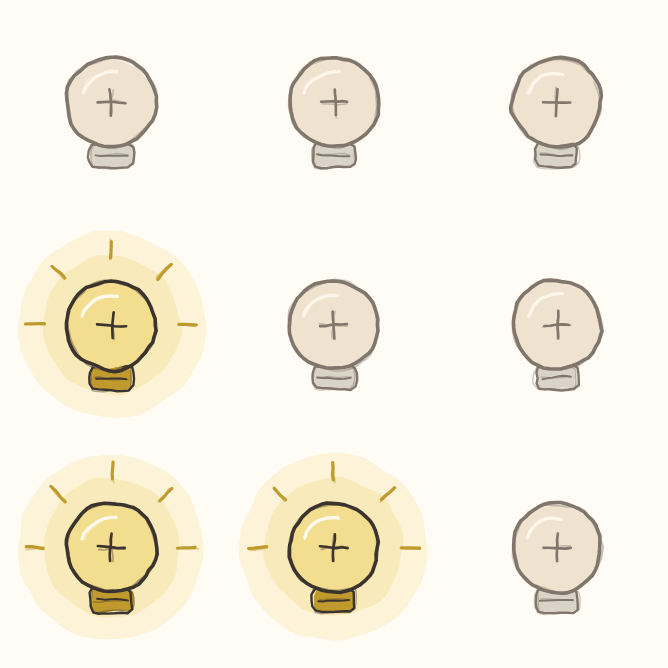
The game shows one next step.
A tap flips a group
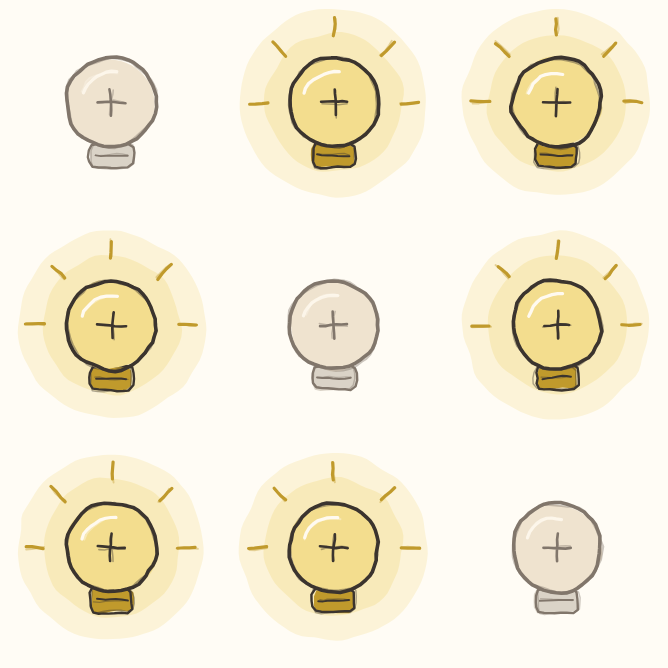
In classic Lights, a tap flips the light you touch. It also flips the lights just above, below, left and right. On turns off. Off turns on. Corner neighbours do not change.
Only lights on the board can change. The board does not wrap round. A corner tap affects fewer squares than a tap with neighbours on all four sides. You can tap a dark square too. Turn all the lights off to win.
Look at what a tap will flip
Pick one switch to think about. Find its own light. Then find its side neighbours. Those are the lights it will flip on a classic board.
Do not look only at the square you tap. A dark switch may turn off other lights. Check the whole group before you choose.
Check the next tap too
One tap may light a square that another tap will turn off. So a useful first move may leave more lights on. Look at what the next switch can clear.
This does not mean lighting more squares always helps. Track every light in the groups you plan to tap. At the end, check the whole board.
Two flips cancel
Flip a light twice and it goes back as it was. Flip it once and it changes. If two planned taps both reach a light, those changes cancel there.
Tapping the same switch twice cancels all its changes. Leave both taps out of a plan. Tap order does not change the final board either. Each light only counts how many times it flips.
Look at the whole group
Before a tap, look at every light it will flip. Will it help set up the next tap? Do not judge only by how many lights turn off at once.
Nimo also has Diagonal Lights, marked ×. A tap there flips itself and its corner neighbours. It does not flip side neighbours. Check which rule your pack uses. A solved board may still use more taps than the shortest answer.
Put the idea into practice
Try a little puzzle.
A small browser example of the rules, with hints if you need them.