


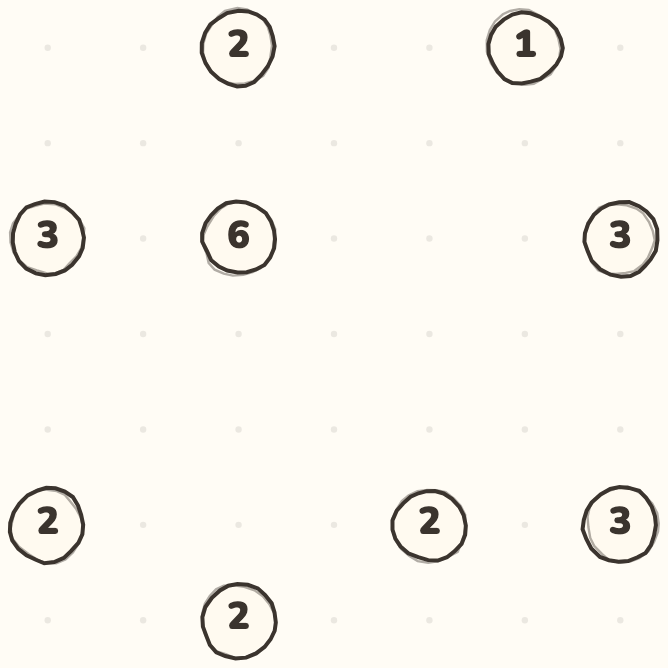
One hint
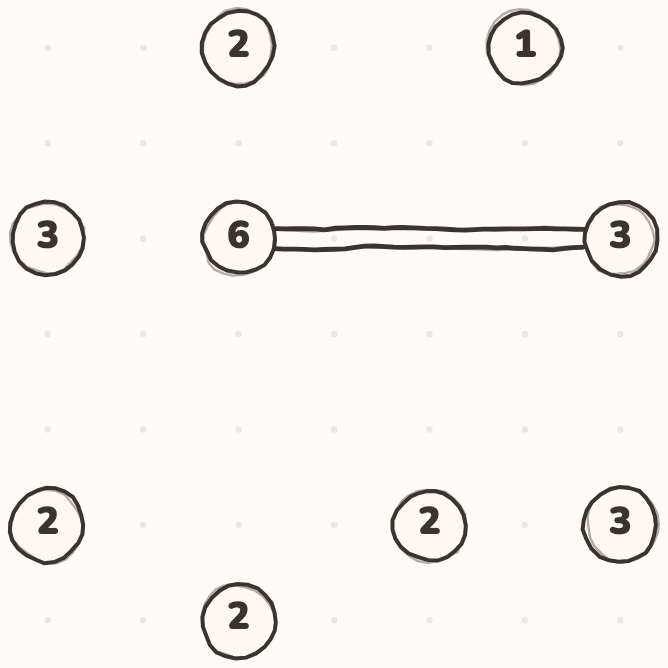
The game shows one next step.
Count and join up
Each island needs the number of bridges on its clue. All islands must also join one big group. You can get all the numbers right and still make two groups. That is not a win.
Before you fill a small group, look outside it. Can it still reach the other islands? Leave room for a bridge out. A full island cannot take another bridge.
Do not seal off a pair
Two islands may use all their bridges on each other. Their numbers can be right while the rest of the board is cut off. Check for that before filling a pair.
For example, two islands marked 2 can take a double bridge. But if that fills them both, they have no room to reach any other island. If other islands remain outside, that choice cannot work.
Leave room to join the rest
Ask what a double bridge would leave at both ends. Would either island still have room for a way out? If not, check if they already reach all the islands.
A rule that stops a double may still allow one bridge. Use the clue totals to decide where the bridges left must go. Joining up tells you a lane is needed. It does not always tell you that it needs two lines.
Count the bridges still needed
Start with the clue. Take away bridges already there. Then count how many each neighbour can still take. A 5 with three open neighbours needs a bridge to each. Two neighbours can give at most four bridges.
Check the groups too. Two 1s cannot join only each other if other islands remain. That would cut them off. A ring of bridges is allowed. What matters is that no island is left out.
Keep a way out
A group may have just one path to the other islands. That path needs at least one bridge. It might need two to meet the clues. The need to join up alone does not prove it needs two.
Check that a new bridge will not cross another. Check that both ends have room for it. Count bridges first. Then follow the groups. Keep doing both checks as you play.